More Than Sensation: Employing an Vehicle Telemetry System to achieve Superior Suspension Tuning and Settings
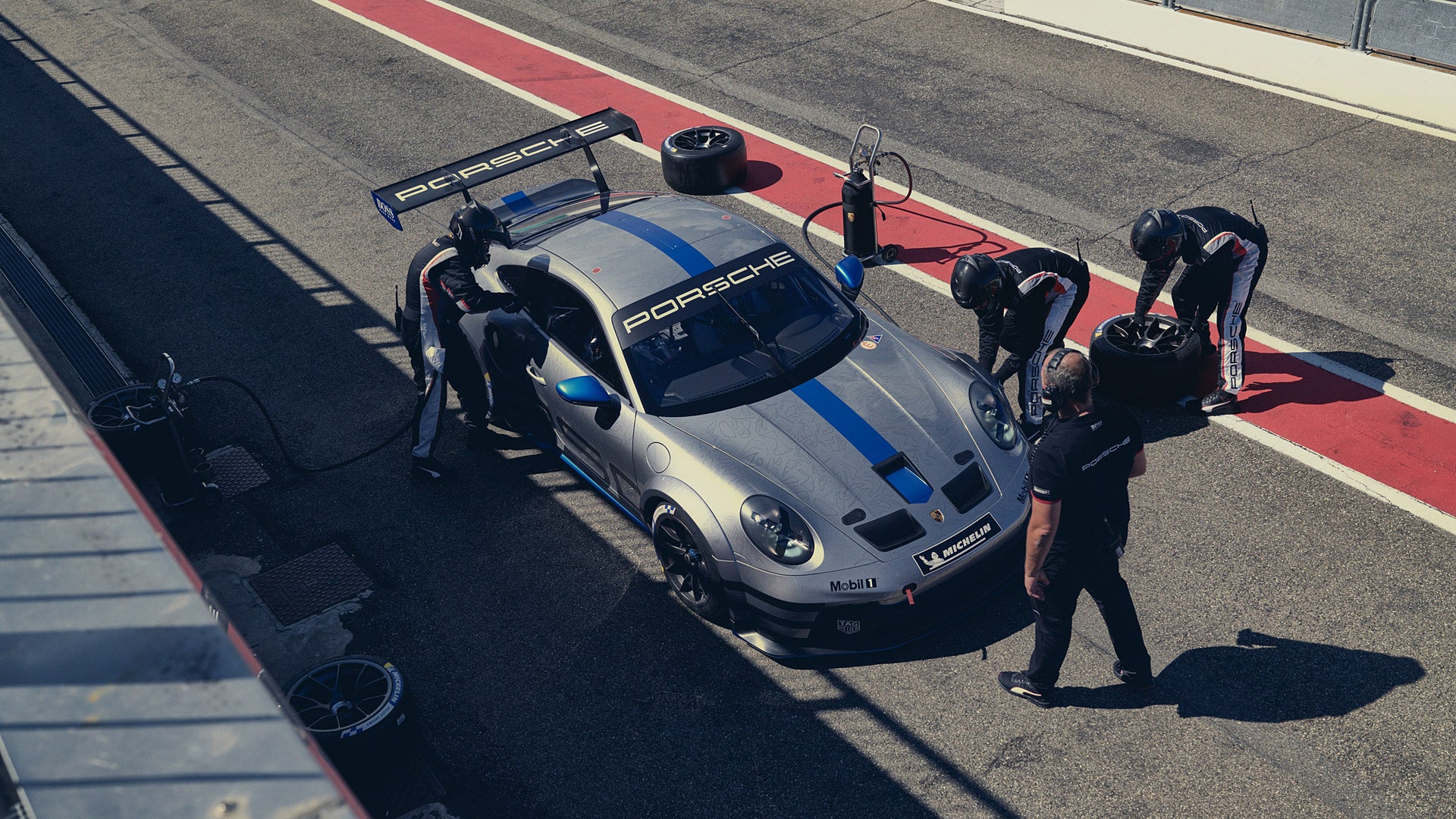
Inside the intensely competitive arena of modern professional drifting, victory is not merely exclusively a product of brute engine power or pilot courage. Rather, it has evolved into a multifaceted engineering challenge which requires a painstaking marriage of choosing a inherently capable chassis, equipping it with the highest-quality performance hardware, and, most critically, grasping its live performance on the circuit through sophisticated vehicle dynamics analysis tools. This comprehensive guide acts as your roadmap from the very first idea of a project car all the way to the last engineering-refined refinements that elevate a powerful vehicle into a repeatable podium finisher. We will delve deep into the art and science of chassis dynamics adjustment, illustrating how a state-of-the-art suspension tuning tool like precise measurement hardware removes assumptions and provides exceptional visibility into your vehicle's real-world performance.
The bedrock of any exceptional drift car is, indisputably, the chassis itself. Several platforms have attained legendary standing within the worldwide oversteer community due to their built-in balance, durable build quality, and the vast range of aftermarket parts available. Picking the correct starting point is the first and most significant decision a enthusiast will make. To illustrate, the BMW's E36 3 Series is commonly accepted as one of the finest balanced drift platforms of the modern era. Its near-perfect balanced front-to-rear weight, alongside a RWD setup and bulletproof straight-six motors, forms a chassis that is simultaneously easy to handle for newcomers and highly competitive in the control of a expert competitor. The evolution of this concept, the E46 model BMW, refines these qualities with a more refined structure, broader stance for enhanced stability, and still a greater degree of turning capability as standard from the OEM. Another formidable contender in the professional circuit is the C6 generation Corvette.
This V8-powered track weapon offers a particular combination of strengths to the sideways sport, featuring a lightweight aluminum chassis, a rear-mounted transaxle that contributes to an excellent weight distribution, and the immense thrust of a powerful GM LS engine. This fusion renders it an utter monster on track, capable of initiating and maintaining continuous angles with apparently easy application of throttle. For those seeking remarkable performance per dollar, the 350Z model Nissan rises above as a prime candidate. It is delivered from the factory with a stiff platform, a effective OEM limited-slip differential, and the responsive VQ series powerplant that provides plenty of horsepower and torque for learning and moving up in the activity. Its newer version, the 370Z model, offers more improvements in chassis stiffness, handling precision, and overall engine performance, solidifying its status as a common pick among professional competitors. Other historic platforms that deserve attention are the lightweight rotary-powered FC generation RX-7, the ever-present Nissan S13, the torque-rich Ford SN95, the more recent BMW E90, and the tiny yet incredibly engaging and forgiving MX-5 Miata. All of these cars gives a different palette of characteristics, difficulties, and possibilities, but they all have in common the basic ingredients required to serve as a capable sliding vehicle.
However, selecting the correct platform is merely the first step. To access the true capability of every of these vehicles, major modifications to the steering system and suspension systems are completely essential. This is where the realm of performance aftermarket components enters vital focus. The one most transformative improvement for a dedicated drift machine is the fitting of a high-performance steering angle kit. These advanced assemblies, like those manufactured by specialist companies like specialist manufacturers, are created to radically increase the vehicle's maximum steering angle. A standard street car is extremely restricted in how far its steering tires can rotate, a design trade-off for on-road driving. In sliding, conversely, aggressive steering input is frequently needed to manage and sustain a angle. An steering kit substitutes the factory uprights, tie rods, and potentially control arms with parts that allow the front tires to achieve angles in excess of 70 or even 80 °, compared to a normal OEM limit of around 40 to 50 degs.
This vastly increased capability offers the pilot with dramatically more control during a angle, allowing it to be much easier to initiate a oversteer moment, hold it through a extended corner, and change fluidly from one angle to another. The improvement in controllability is nothing short of revolutionary. Combined with a correctly selected modification is the just as critical enhancement to the vehicle's suspension. Store-bought or even expensive road coilovers are simply not intended for the specific and brutal demands of competitive oversteer. A purpose-built pair of coilovers is of utmost importance. These specialized suspension components incorporate unique damping rates and spring strength that are tuned for the extreme load shifting that is typical of drifting. When a operator initiates a slide, the vehicle's weight is shifted rapidly to the front of the corner. Correct performance dampers handle this transfer in a consistent fashion, allowing the car to find its balance quickly and providing the operator clear feel through the controls and seat. They additionally enable accurate adjustment of ground clearance, shock absorber stiffness, and cross-weight, which are all fundamental parts of dialing in the car's dynamics to a specific track or piloting technique. As a system, a high-quality steering angle kit and a correctly chosen pair of drift-spec coilovers constitute the undeniable physical cornerstone upon which all future refinement is based.
Once the core hardware is installed, the following vital step in the development is the detailed setting of the vehicle's alignment. This is the realm of car suspension tuning, a procedure that can seem intimidating to the newcomer but is, in fact, the key to transforming a collection of fast parts into a cohesive and predictable machine. The most critical parameter of tuning for sliding is certainly negative camber. Wheel camber is the tilt of the tire in relation to the vertical axis when looked at from the forward of the car. When the top of the tire is angled towards the car, this is known as negative camber. For oversteer driving, inward-leaning wheels on the front axle wheels is widely applied and is regarded as essential. The reason is deeply tied to vehicle dynamics.
When a car is cornering at limit slip angles, the body tilts towards the outside of the bend. This chassis roll causes the outer steering tire to lose its best footprint with the tarmac. By applying an inward tilt, the tire is pre-leaned to compensate for this tilt. As the vehicle leans into the turn, suspension tuning tool the tire gains a better contact patch on the road surface, maximizing its traction at the precise point when it is needed most for directional command. Usually, front axle angles for a competition drift machine fall between approximately -3 degrees to as extreme as -5 degrees or even beyond, based on the parameters of the chassis geometry, tire selection, and operator style. The back wheels also use negative camber, but the angles are usually less and less aggressive than the front. Overly aggressive negative camber at the rear can cause the vehicle to overly tail-happy and hard to control on throttle input, as it reduces the available grip area of the driven wheels during forward throttle application. Therefore, rear angles are commonly in the range of -1 degree to -3 degrees, finding a careful equilibrium between providing sufficient lateral traction to help in starting and maintaining the angle while simultaneously preserving good grip for exiting the bend. Camber is just one part of the broader suspension geometry puzzle, which furthermore involves toe, caster, and steer correction adjustment.
Toe angle is the orientation of the tires when looked at from a bird's-eye view. Inward toe means the leading edges of the tires are closer together than the rear edges, while outward toe means the reverse. For sliding, a slight amount of front toe out is often used to sharpen the initial steering feel, making the chassis feel more nimble and ready to initiate a slide. Rear toe angle is generally set to zero or a incredibly small amount of inward toe to foster stability under acceleration. Caster is the forward or rearward inclination of the steering axis when viewed from the side of the vehicle. car alignment tuning More caster angle enhances self-centering and high-velocity confidence, and it also increases camber increase during cornering, which is highly useful. Tuning these parameters is a complex interaction where a modification to a single parameter can and often will influence the others. The old-school method for dialing in a chassis's alignment for drifting has historically been a time-consuming process of experimentation and feeling. A pilot or team would introduce a adjustment based on experience, test the car on track, depend on the pilot's subjective sensation and feedback, and then introduce another tweak. This process would repeat time after time until the vehicle felt "acceptable" or the allotted practice time ended. This methodology is not just incredibly slow in terms of time and tires, fuel, and parts, but it is also inherently flawed.
Human perception is a notoriously inconsistent measurement tool, influenced by many factors such as tiredness, evolving track conditions, ambient heat, and merely the mood of the pilot on that particular session. What feels "tail-happy" on one lap might feel "understeery" on the subsequent lap, leading to conflicting data and frustrating changes. This traditional limitation in vehicle dynamics optimization is exactly where state-of-the-art technology has intervened to transform the landscape.
The advent and integration of sophisticated suspension tuning applications has ushered in a new age for engineering and refining professional sliding vehicles. These systems, represented by cutting-edge systems like data acquisition tools, function by directly measuring the real-time physical behavior of the vehicle as it is being driven on the track. Unlike relying on subjective feel, these devices acquire measurable metrics on essential factors such as damper compression and extension, corner velocities, acceleration forces, lock position, and driver input input. This collected information flow is then analyzed by powerful software that can graph and interpret the metrics in a actionable way. For the very first time, tuners and crews can see precisely what the car is performing at each moment of a lap. This ability revolutionizes the entire chassis setup process. Imagine the specific task of setting the front negative camber for a particular chassis. As an alternative to making a adjustment from -3 degrees to -3.5 degrees and then driving several passes to try and "feel" a change, a telemetry system can provide instant and definitive data. The software can display in a chart how the tire's grip is acting during the key phases of a slide: the initial flick, mid-corner, and switch. It can reveal if the present camber setting is enabling the loaded tire to achieve optimal drift suspension tuning guide grip or if the rubber is working inefficiently on its external edge.
The tool can subsequently suggest fact-based recommendations for adjustment. Perhaps the telemetry indicates that the outside front tire is still overloading its edge at -3.5 degrees of negative camber, indicating that a move towards angle, say -4 degrees, might be advantageous. Conversely, the data might indicate that the tire is not reaching optimal operating temp or that the inside edge is degrading unevenly, which could point to that there is overly aggressive negative camber and a slight reduction back to -3.2 degrees would be more optimal. This level of precision and useful insight was simply unattainable in the days of solely manual adjustment.
The benefit of using a advanced suspension tuning tool goes well beyond just optimizing camber. It becomes an essential damper adjustment manual that is specific to your specific car. When fine-tuning the shock absorber clickers on your adjustable dampers, instead of relying on vague guidelines or mimicking another team's setup, you can employ the data to observe how the chassis is performing in reaction to your changes. The tool can show the suspension travel trace over a lap, highlighting if the shocks are managing the weight transfer optimally or if they are permitting the car to become unsettled too much after a flick. It can help in pinpointing problems like hitting the bump stops or losing droop, permitting you to apply data-backed choices to spring preload, rebound/compression settings, or ground clearance. This process applies just as well to the intricate art of car alignment tuning. Beyond camber, the software can give data into how changes to toe settings and caster are influencing the car's handling during various parts of a drift. For instance, it can help you to ascertain the optimal amount of front negative toe for your specific angle kit setup and piloting approach by measuring the response time of initial response and the predictability of the chassis at maximum countersteer. This makes the tool an exceptionally powerful performance optimization handbook that is dynamically calibrated by the real-world dynamics of your specific chassis on the track. It moves the whole project from a dark art into a repeatable optimization procedure.
Furthermore, the value of a platform like data acquisition is not at all confined to professional teams with large funding. For the grassroots enthusiast, it serves as an amazing educational tool. It in essence provides the builder with the insight of a full-time dynamics engineer without requiring the corresponding expense. It speeds up the tuning process by giving definitive answers to questions that would otherwise take seasons of experience to understand. A driver can understand how their particular car reacts to various adjustments, developing a more profound understanding of vehicle dynamics in the process. It also democratizes professional performance tuning techniques, permitting every enthusiast with the desire to refine their car to accomplish it in a efficient and productive way. This is particularly important in a activity like oversteer competition, where tuning knowledge has historically been a highly secretive advantage among elite teams. In the modern era, that power can be in the garage of any motivated driver.
In conclusion, the journey to constructing and dialing in the ultimate competitive drift car is a comprehensive project that perfectly blends classic engineering wisdom with cutting-edge data technology. It commences with the wise selection of a capable chassis, then built upon the integration of critical drift-spec components like high-performance steering angle kits and expertly specified performance adjustable dampers. The build then progresses into the precision phase of car suspension tuning, where settings like negative camber, toe, and caster angle are meticulously configured to match the car's upgraded geometry and the operator's individual needs. Finally, and what really distinguishes the today's methodology from the traditional methods, is the integration of a advanced drift telemetry software. This system eradicates the approximation and inefficiency of solely seat-of-the-pants tuning by delivering empirical, real-time telemetry on how the car is really performing. It serves as an unparalleled engineering partner, a comprehensive alignment optimization handbook, and a all-in-one vehicle dynamics tool. In unison, this complete philosophy ensures that every element of the drift machine—from the pick of the car to the most minute click on the damper—is optimized for peak competitiveness on the circuit. It signifies the total progression of the art of oversteer driving, merging physical car control with surgical chassis dynamics to build the ultimate dominant cars imaginable.